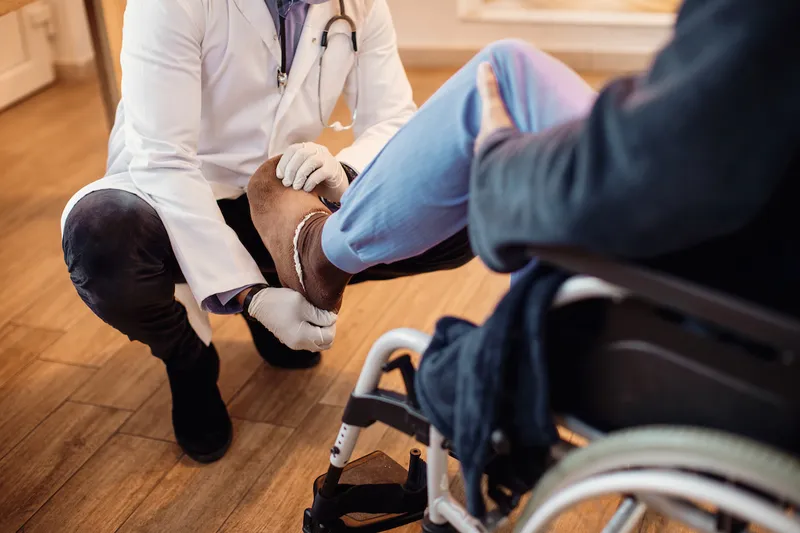
A sore on the lower leg that is slow to heal can be a venous ulcer, caused by blood pooling from weak leg veins. First Coast Cardiovascular Institute (FCCI) lists leg ulcers among the signs of deep vein disease, and its wound care specialists diagnose venous ulcers. Having vein doctors and wound care in one practice means both sides get treated together.
Why poor veins cause sores
When valves in the leg veins leak, pressure builds near the ankle. Over time skin gets thin, itchy and discolored, and small scrapes can turn into wounds. FCCI notes untreated chronic venous insufficiency can cause leg pain, swelling, skin changes and ulcers.
Venous or arterial?
Not every leg wound is from veins. Blocked arteries can cause wounds too, especially in people with diabetes or peripheral artery disease. FCCI's wound care specialists diagnose diabetic foot ulcers, arterial ulcers, venous ulcers, pressure ulcers, traumatic wounds, surgical wounds and other non-healing wounds of the legs and feet. Vascular ultrasound helps tell which is which.
Care options FCCI lists
- Vascular testing
- Early endovascular intervention
- Skin grafts
- Amniotic membrane therapies
- Hyperbaric oxygen treatment
- Preventative surgery
Your team builds a personal plan. FCCI says its goal is to relieve pain, decrease recovery time and heal the wound.
Who is on the team
FCCI's Wound Care and Amputation Prevention group includes Dr. David Swain, DPM, CWSP, and Donna Geiger, APRN, CWON. They work with FCCI's vascular and endovascular physicians, including Dr. Yazan Khatib, co-founder of the Save a Leg, Save a Life Foundation.
When to worry
Spreading redness, fever, a bad smell or sudden pain in the wound can mean infection. Call your doctor right away, and call 911 or go to the ER if you feel very ill.
Helping a loved one
Older adults sometimes hide a leg wound under socks or a bandage for weeks. If you help care for a parent, look at their lower legs now and then, and notice color changes, swelling or a bandage that never seems to come off. Offer to make the call and drive them to the visit. FCCI accepts Medicare and many other plans, and the front desk can tell you which office is closest. A fast start often means a simpler plan.
About the Vein Clinic at FCCI
Slow-healing sores need more than one kind of expert, and FCCI has them together. Since 2002 the practice has served Northeast Florida with a Vein Clinic of board certified endovascular and vascular physicians, plus wound care, cardiology, sleep medicine and pulmonary specialists in the same building. Your vein doctor and wound team can talk down the hall instead of across town.
The ultrasound that looks for the vein problem behind a sore is done by registered vascular technologists in an IAC accredited lab. Vein treatment is outpatient.
Getting ready for your visit
- Call 904.493.3333 to book, Monday to Friday, 8 a.m. to 5 p.m.
- Fill out the New Patient Registration form on Patient Resources and note how long the sore has been open
- Bring your ID, insurance card and a list of your medicines
- Wear shorts or loose pants so your legs are easy to check
- Write down when symptoms started and what makes them better or worse
- Need to reschedule? FCCI asks for at least 24 hours' notice
Please keep photos of wounds and health details off online forms. Show them to your care team at the visit or describe them by phone.
Have a leg sore that will not close? Call 904.493.3333 Monday to Friday, 8 to 5, or send a request from our Book page. The free 20-minute vein screening is offered at FCCI's Southside office, 7011 AC Skinner Parkway, Ste 160. If you notice sudden leg swelling with chest pain or shortness of breath, call 911.